
28th May 2025
A new report from the Centre for Justice Innovation and the Centre for Care explores the heightened risk of criminal justice involvement for children who have had contact with the social care system. Drawing on whole-population data and expert insights, the report highlights systemic challenges and outlines practical strategies that could reduce criminalisation and improve outcomes for these vulnerable children.
Details
The report finds that any level of contact with the social care system – ranging from a referral with no further action to being taken into care – is associated with a significantly increased likelihood of receiving a criminal caution or conviction. Even children referred to social care with no further action were three times more likely to be criminalised than children with no social care contact at all. The risk increases with the intensity of social care involvement, with children who are looked after facing the highest risk.
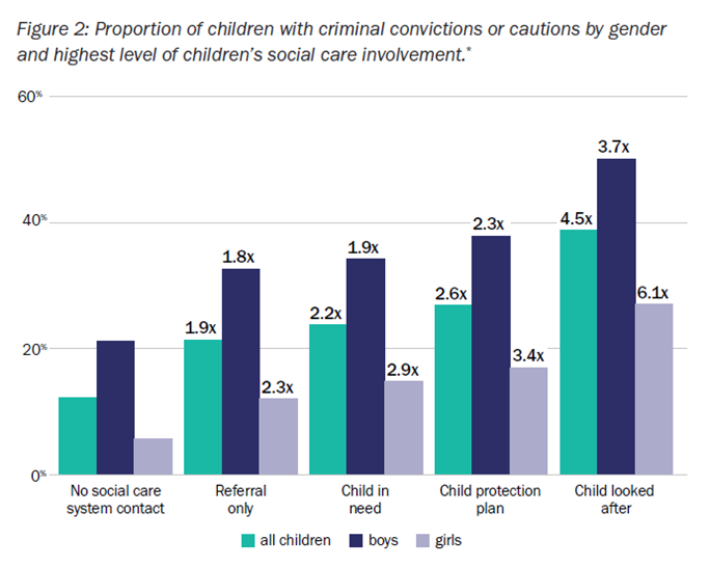
Gender and special educational needs also influence outcomes. While boys are at a higher overall risk of youth justice system involvement, girls with social care contact face a steeper increase in risk than boys. Children with socio-emotional and mental health needs are particularly vulnerable, with more than half of such children who are in contact with social care having a criminal caution or conviction by adulthood. The report also reveals stark regional disparities, with some local authorities showing criminalisation rates for children with social care contact that are three times higher than others (for example, contrast the rate of 7.8% in Hammersmith and Fulham with the rate of 28% in North Lincolnshire, and the national average of 19.5%).
To address these issues and try to reduce the number of children in contact with social care who come into the youth justice system, the report identifies four key strategies:
- investing in and adequately funding preventative services;
- embedding trauma-informed practices across education and justice systems, by ensuring that professionals have the capacity, knowledge and processes in place to understand and respond to the needs of children with trauma;
- strengthening protective and diversionary approaches within youth justice, including by improving the use of the National Referral Mechanism to prevent prosecution of exploited children; and
- improving communication between social care and criminal justice agencies, to allow the children to receive more appropriate and coordinated support.
These strategies are based on workshops and interviews with a range of researchers, experts and frontline practitioners who have drawn on their experiences and real-life case studies.
Commentary
The past decade has seen significant progress in reducing the number of children coming into the youth justice system. However, this positive progress has not been reflected amongst all children groups equally. The one group that remains highly vulnerable, and requires more to do be done, is the children who have contact with the social care system.
The report underscores the urgent need for systemic reform to protect children with social care contact from unnecessary criminalisation. For practitioners and policy-makers, it highlights the importance of early, trauma-informed, and coordinated interventions. Ensuring that children’s histories and vulnerabilities are recognised across systems is essential to safeguarding their futures and promoting fairer, more effective youth justice outcomes.
This report will add to a practitioner’s resources when representing or working with a care-experienced young person, for example when writing representations or reports. The National Protocol on Reducing Unnecessary Criminalisation of Looked-After Children and Care Leavers is also extremely helpful in this regard.
You can also read YJLC’s legal guides ‘Dare to Care: Representing Care Experience Young People’ and ‘Trauma Informed Lawyering’ to help further your knowledge on these areas.